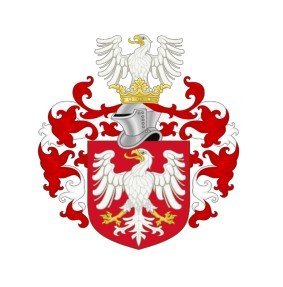
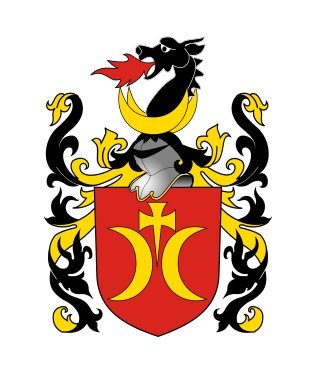
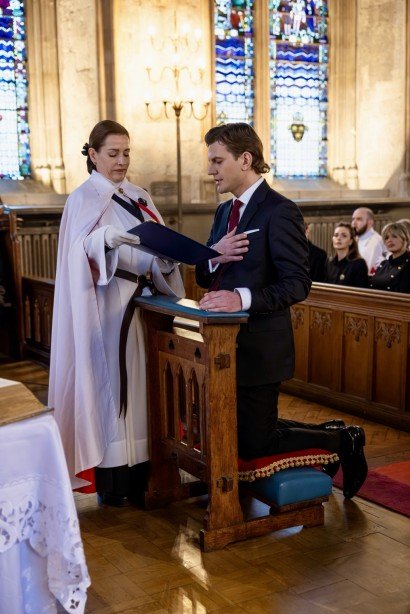
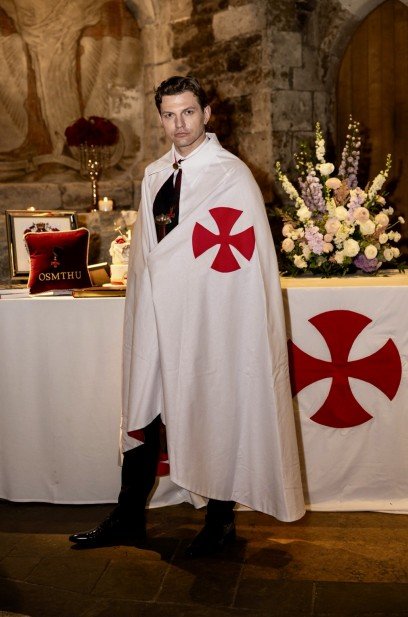
The Noble Clan Ostoja
The Clan Ostoja represents one of Poland's historic heraldic
traditions.
As members of the Polish szlachta, Ostoja families were associated
with military service, governance, diplomacy, landholding, and
loyalty to the ruling houses of Poland and Masovia.
While the Piast dynasty represents Poland's royal heritage, the
Clan Ostoja embodies the enduring tradition of Polish knighthood
and nobility.
Together, they form an important part of Walter's ancestral
narrative: the convergence of Masovian royal heritage and Ostoja
noble identity.
Noble Ostoja and the Royal Piast Dynasty
The Ostoja Clan, as a noble family within Poland, often served and
supported the Piast dynasty and Masovian rulers.
The Piasts were Poland's first ruling dynasty and held the highest
authority in Poland from the 10th century onward.
Like other Polish noble families, the Ostoja Clan served the interests
of Piast kings and dukes as military leaders, landholders,
administrators, and political allies.
It is important to distinguish the two traditions.
The Ostoja Clan held noble status within the Polish social structure,
while the Masovian Piasts were royal nobility by direct connection to
the founding Piast dynasty.
This distinction helps explain Walter's dual ancestral narrative:
noble Ostoja heritage and Masovian royal heritage.
Ostoja and Masovia
In Mazovia, the Ostoja Clan would have served the Masovian dukes,
who were a branch of the Piast family.
Mazovia held a semi-autonomous status with its own dukes while
remaining tied to the wider Polish Kingdom.
Nobles such as the Ostojas provided essential support to regional
rulers as vassals, military commanders, administrators, and
landholders.
Paternal Lineage and Noble Origins
Valters Stojass belongs to the ancient paternal haplogroup R-YP6063,
a sub-branch of R1a-M198, with an estimated origin around the
3rd century CE.
This lineage predates the formation of surnames and heraldic clans
in the Polish-Lithuanian cultural sphere.
Historical, genetic, and territorial evidence places the Stojass male
line within the noble estate structure of Polish Livonia, especially
the regions of Marienhausen and Kalnmuiza, which were part of the
Polish-Lithuanian Commonwealth from 1561 to 1772.