Heritage

The Heritage of Walter Everest Stojash z Ostoja

Walter Everest Stojash z Ostoja

A continuing exploration of Masovian royal heritage, the noble traditions of Clan Ostoja, recognised civilisation badges, paternal-line research, and modern chivalric responsibility.

Masovian Royal Piast Heritage

Honouring the Royal Masovian Heritage of Walter Everest Stojash z Ostoja

Formal Lineage Statement

Honouring the Royal Masovian Heritage of the Founder.

Walter Everest Stojash z Ostoja traces his paternal lineage through the historic traditions of Masovia, the legacy of the Piast era, and the noble Clan Ostoja.

Through ongoing genealogical research, archival study, and Y-DNA analysis, he continues to document and preserve the story of a lineage shaped by centuries of Polish noble history.

After sequencing thousands of genetic markers, Walter's paternal lineage has been associated with the Masovian royal nobility — a distinguished branch of the Piast dynasty, Poland's first ruling house.

Emerging around the 10th century, the Piast dynasty laid the foundations of the Polish state, reigning as kings and dukes for centuries.

The Masovian Piasts rose as a royal noble line within this dynasty, ruling over the Duchy of Masovia and leaving a lasting mark on Polish history.

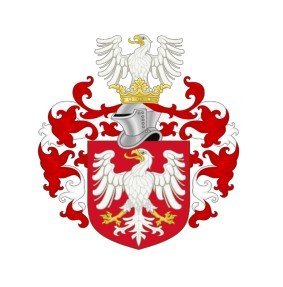
Masovian Royal Piast heritage emblem

The Masovian Piast Connection

The Piast dynasty was Poland's first ruling house, emerging in the 10th century and laying the foundations of the Polish state.

The Masovian Piasts formed one of its most significant regional branches, ruling the Duchy of Masovia and contributing substantially to the political, cultural, and noble development of medieval Poland.

Walter's research connects his paternal heritage to this Masovian sphere, placing his lineage within the broader historical legacy of Poland's earliest ruling and noble traditions.

Paternal Lineage Timeline

900–1100 AD — Origins of the Piast Royal Line

The paternal haplogroup branch R-M198 → R-YP6063 is associated with early West Slavic warrior classes.

The Piast dynasty consolidates power in Greater Poland and Masovia.

Walter's ancestors at this stage are interpreted within the tradition of Slavic warrior elites and proto-Piast lineage.

1100–1300 — Masovian Piasts and Ostoja Clan

The Piast dynasty divides into regional branches, including Masovia.

The Ostoja heraldic tradition rises as knightly nobility serving Piast and Masovian rulers.

Masovia becomes a frontier region with ties to Lithuania and Ruthenia.

1561 — The Duchy of Inflanty

Following the collapse of Livonia after the defeat of the Livonian Order, Poland-Lithuania annexed southern Livonia, including Latgale, Daugavpils, Marienhausen, and the Kalnmuiza region.

This became Polish territory under the name Duchy of Inflanty.

1772 — First Partition of Poland

Latgale, formerly part of Polish Livonia, was annexed into the Russian Empire.

Polish noble families in the region remained, but records and surnames increasingly adapted to changing political and linguistic environments.

Present Day

Walter carries a layered identity: Masovian by dynastic association, Polish noble by paternal line, Ostoja by clan tradition, and shaped by centuries of Commonwealth and Livonian history.

Ostoja Clan Legacy

Noble and Knightly Heritage of Walter Everest Stojash z Ostoja

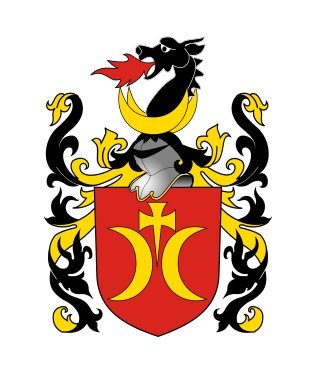
Ostoja Clan heraldic coat of arms

The Noble Clan Ostoja

The Clan Ostoja represents one of Poland's historic heraldic traditions.

As members of the Polish szlachta, Ostoja families were associated with military service, governance, diplomacy, landholding, and loyalty to the ruling houses of Poland and Masovia.

While the Piast dynasty represents Poland's royal heritage, the Clan Ostoja embodies the enduring tradition of Polish knighthood and nobility.

Together, they form an important part of Walter's ancestral narrative: the convergence of Masovian royal heritage and Ostoja noble identity.

Noble Ostoja and the Royal Piast Dynasty

The Ostoja Clan, as a noble family within Poland, often served and supported the Piast dynasty and Masovian rulers.

The Piasts were Poland's first ruling dynasty and held the highest authority in Poland from the 10th century onward.

Like other Polish noble families, the Ostoja Clan served the interests of Piast kings and dukes as military leaders, landholders, administrators, and political allies.

It is important to distinguish the two traditions.

The Ostoja Clan held noble status within the Polish social structure, while the Masovian Piasts were royal nobility by direct connection to the founding Piast dynasty.

This distinction helps explain Walter's dual ancestral narrative: noble Ostoja heritage and Masovian royal heritage.

Ostoja and Masovia

In Mazovia, the Ostoja Clan would have served the Masovian dukes, who were a branch of the Piast family.

Mazovia held a semi-autonomous status with its own dukes while remaining tied to the wider Polish Kingdom.

Nobles such as the Ostojas provided essential support to regional rulers as vassals, military commanders, administrators, and landholders.

Ostoja Heritage Timeline

c. 1200–1300

Emergence of the Ostoja heraldic community among the knightly nobility of medieval Poland.

14th Century

The Clan Ostoja rises to prominence through military service, landholding, and governance across the Kingdom of Poland.

1370–1460

The era of the powerful Scibor/Stibor family, among the most influential noble houses associated with Ostoja, serving the crowns of Poland and Hungary.

1410

At the Battle of Grunwald/Tannenberg, Poland and Lithuania broke Teutonic domination in Prussia.

1561–1772

Polish Livonia/Inflanty becomes part of the Polish-Lithuanian Commonwealth.

Polish noble families, including Ostoja-linked lines, establish themselves throughout the region.

18th Century

The Stojass family appears in historical records within the Marienhausen and Kalnmuiza regions of former Polish Livonia.

Present Day

Walter Everest Stojash z Ostoja continues genealogical and genetic research into the family's connection to the Masovian Piast sphere, Clan Ostoja, and the noble heritage of the Polish-Lithuanian Commonwealth.

Paternal Lineage and Noble Origins

Valters Stojass belongs to the ancient paternal haplogroup R-YP6063, a sub-branch of R1a-M198, with an estimated origin around the 3rd century CE.

This lineage predates the formation of surnames and heraldic clans in the Polish-Lithuanian cultural sphere.

Historical, genetic, and territorial evidence places the Stojass male line within the noble estate structure of Polish Livonia, especially the regions of Marienhausen and Kalnmuiza, which were part of the Polish-Lithuanian Commonwealth from 1561 to 1772.

Recognised Heritage Badges

Civilisation Badges

Piast State Slavs | Medieval Georgia | Avar Imperial Lineage

Overview

Walter's civilisational heritage badges reflect deep ancient genetic signatures connected with early Slavic, Caucasus, and steppe populations.

These badges are best understood as a cultural and ancestral backdrop that enriches his creative identity rather than as a replacement for documentary genealogy.

Unified Interpretation of the Three Civilisation Badges

Piast State Slavs

Dynastic Core

This badge represents a connection to the early Slavic populations associated with the formation of the medieval Polish state and the cultural foundations of the Piast era.

It aligns with the historical frame of the Piast state and Walter's paternal-line research.

Medieval Georgia

Deep Indo-European/Caucasus Layer

This badge reflects a deeper ancient ancestral layer connected to the historic Christian civilisations of the Caucasus and their influence on medieval Europe.

It represents ancient ancestry that may have flowed into West Slavic, Baltic, and steppe-linked populations.

Avar Imperial Lineage

Steppe Warrior Layer

This badge reflects prehistoric and early medieval steppe heritage connected to Eurasian warrior cultures that influenced Central and Eastern Europe before the formation of later dynasties.

This layer is not a modern ethnic label; it is deep ancestral context.

One-Line Heritage Summary

My lineage carries ancient steppe-warrior roots, Caucasus-influenced Indo-European ancestry, and emerges historically as part of the Piast State Slavs — the founding noble class of medieval Poland.

Alternative

Steppe in my deep past, Caucasus in my ancient blood, Piast in my living lineage.

Why This Aligns With the Piast-Ostoja Narrative

This interpretation is consistent with a Piast-Ostoja noble identity because early Polish noble populations often reflected mixed Slavic, steppe, Baltic, and Caucasus-influenced ancestral layers.

Walter's Y-DNA remains the central paternal lineage, while autosomal and ancient-origin signals provide a broader pre-medieval background.

A Heritage That Bridges Three Civilisations

Together, the three badges place Walter Everest Stojash z Ostoja at the crossroads of Slavic state formation, Caucasian Christian civilisation, and Eurasian steppe heritage.

This creates a broad ancestral profile spanning the formative worlds of medieval Europe and Asia.

Modern Templar & Chivalric Traditions

Modern Templar & Chivalric Traditions

Service, Honour, Justice, Faith and Responsibility

Non Nobis Domine, Non Nobis, Sed Nomini Tuo Da Gloriam.

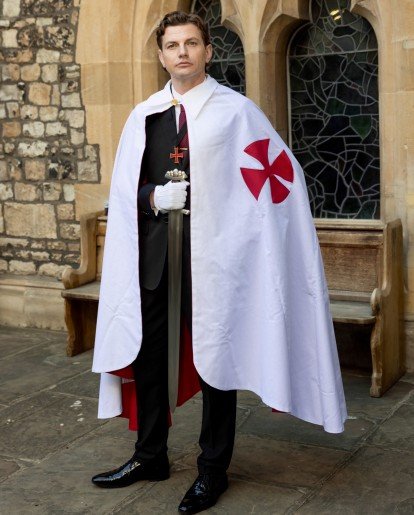
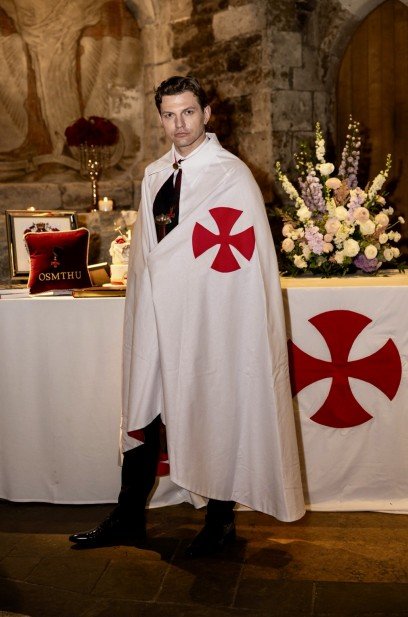
Walter Stojash in ceremonial Templar mantle

Formal Admission into the Order

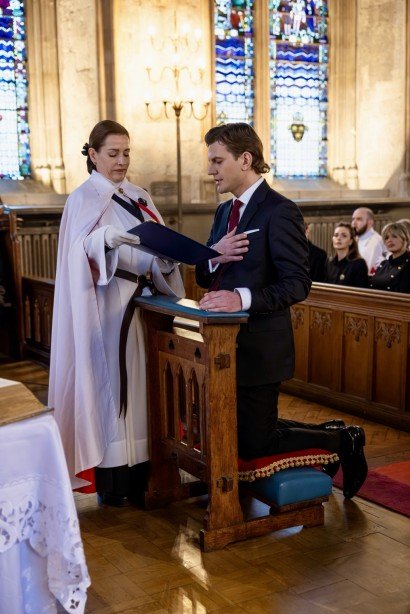
By the authority of the Ordo Supremus Militaris Templi Hierosolimitani Universalis (OSMTHU) and the International Grand Priory, I was formally admitted into the Order with the rank of Knight and recognised as the Honourable Knight KSTJ Walter Stojash, residing in England.

As declared by the Commander of the Commandery of Laccobriga of the Grand Priory of Portugal of the Sovereign and Military Order of the Temple of Universal Jerusalem (OSMTHU), I accept this distinction with humility and gratitude.

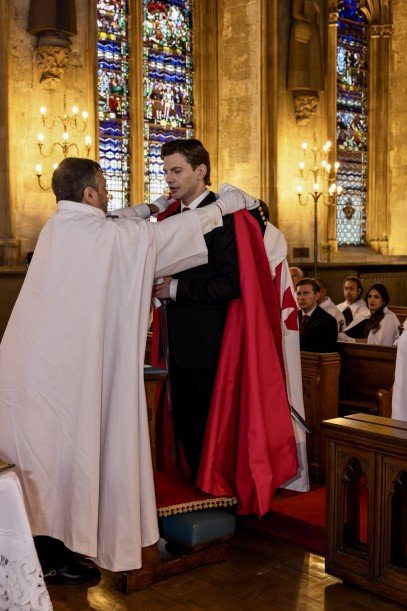
Walter Stojash during formal admission into the Order

The Oath and Its Responsibility

The oath I have taken is not merely ceremonial. It is a lifelong commitment to uphold the principles of chivalry, honour, justice, service, humility, and the protection of those most in need.

As witnessed according to the customs and traditions of Chivalry, I accept the responsibilities that accompany the mantle, the insignia, and the rank bestowed upon me.

The mantle may be bestowed in a single day, but the duty it represents endures for a lifetime.

Non Nobis Domine — Not unto us, O Lord, not unto us, but unto Thy Name give glory.

Walter Stojash taking the ceremonial oath

Modern Chivalry and WS Hair Pro

Walter Stojash, National Hairdresser of the Year 2024 and founder of WS Hair Pro, has been formally invested into a Templar Order of Chivalry in a private ceremonial setting, recognising his contribution to the art of hairdressing, leadership within the industry, and his continued pursuit of excellence.

The investiture ceremony reflects not only a personal milestone, but also an extension of a broader narrative — one that merges craftsmanship, heritage, and a commitment to elevated standards.

Known for redefining luxury hair experiences in Central London, Stojash has built WS Hair Pro into a destination synonymous with precision, elegance, and innovation.

His work has been recognised through multiple national accolades, positioning him among the most influential figures in the industry.

Service, excellence, and responsibility remain values that guide both his personal journey and his work as Salon Director of WS Hair Pro.

As WS Hair Pro continues building the Imperial Collection in the City of London, Walter remains committed to raising standards in the industry and supporting excellence wherever it is found.

Ceremonial portrait of Walter Stojash following his investiture
Signature Statement

KSTJ Walter Stojash

Templar Corps

0+S+M+T+H+U+ :: O+S+M+T+J+U+ :: Prioratus Internacionalis

#NonNobisDomine #OSMTHU #KnightTemplar #TemplarCorps #Chivalry #Investiture #Honour #Service #Justice #Faith #London #WalterStojash